Verifiable ownership is the cryptographic proof of exclusive control over a digital asset, such as a token or NFT, without reliance on a central authority. This is achieved by linking the asset's control to a private key, which is mathematically proven to correspond to a public address on a blockchain. Unlike traditional systems where ownership is a database entry managed by an institution, blockchain-based ownership is self-sovereign and can be independently verified by anyone with access to the public ledger. This creates a fundamental shift from trusting an intermediary to trusting cryptographic proof and decentralized consensus.
Glossary
Verifiable Ownership
Verifiable Ownership is the cryptographic proof, recorded on a blockchain, that a specific wallet address holds the definitive and indisputable rights to a digital asset.
definition
BLOCKCHAIN FUNDAMENTAL
What is Verifiable Ownership?
Verifiable ownership is the cryptographic proof of exclusive control over a digital asset, such as a token or NFT, without reliance on a central authority.
The mechanism relies on public-key cryptography and the immutable ledger. When an asset is minted or transferred, the transaction is signed by the owner's private key and broadcast to the network. The blockchain records this transaction, permanently associating the asset's unique identifier with the new owner's public address. To prove ownership, one simply demonstrates control of the private key, typically by signing a message. This proof is cryptographically secure, tamper-evident, and can be verified by anyone using the corresponding public key and the transaction history on-chain.
This capability is foundational for digital scarcity and new economic models. It enables true ownership of non-fungible tokens (NFTs) for digital art, in-game items, and real-world asset tokens (RWAs). For developers, it allows for programmable ownership logic through smart contracts, enabling features like automated royalties, access control, and composable DeFi applications. The transparency of the ledger also allows for on-chain provenance tracking, creating an auditable history of an asset's custody and authenticity from creation to the current holder.
how-it-works
CORE MECHANISM
How Verifiable Ownership Works
Verifiable ownership is a cryptographic method for proving exclusive control over a digital asset, such as an NFT or token, without relying on a central authority. This foundational blockchain concept enables true digital property rights.
Verifiable ownership is established and proven through the possession of a private key that cryptographically corresponds to a public address recorded on a blockchain. When an asset is minted or transferred, this transaction is immutably logged on-chain, with the recipient's public address listed as the new owner. The only entity that can authorize a subsequent transfer from that address is the holder of the corresponding private key, creating an unforgeable chain of custody. This system replaces trusted intermediaries with cryptographic proof.
The verification process is permissionless and can be performed by anyone. To confirm ownership, a verifier checks the asset's smart contract or transaction history on the public ledger, confirming the current owner's public address. For a user to prove they are that owner, they must cryptographically sign a message with their private key. The signature can be publicly verified against the known public address, proving control without ever exposing the secret key. This mechanism underpins interactions in decentralized applications (dApps), allowing for secure logins, asset transfers, and governance voting.
This model enables several key capabilities: true digital scarcity, as assets cannot be duplicated; self-custody, removing reliance on third-party custodians; and composability, as verifiably owned assets can interact programmatically with other smart contracts. Unlike traditional digital files, which can be copied infinitely, a blockchain-based asset's provenance and exclusive control are objectively verifiable by the network, creating a new paradigm for digital property rights and the foundation for the broader token economy.
key-features
MECHANICAL PROPERTIES
Key Features of Verifiable Ownership
Verifiable ownership is a cryptographic property enabling users to prove control over a digital asset without relying on a central authority. Its core features are derived from the mechanics of public-key cryptography and decentralized ledgers.
01
Cryptographic Proof of Control
Ownership is proven by demonstrating control of a private key that corresponds to a public address on a blockchain. This is achieved by digitally signing a transaction, which anyone can verify using the public key without exposing the private secret. This replaces the need for trusted intermediaries like banks or registries to confirm asset ownership.
02
Immutable & Transparent Ledger
Ownership records are stored on a decentralized ledger (e.g., a blockchain), which provides a permanent, tamper-resistant history. The consensus mechanism of the network (e.g., Proof-of-Work, Proof-of-Stake) ensures that once a transfer is recorded, it cannot be altered or revoked unilaterally, creating a single source of truth.
03
Self-Custody & Non-Custodial Wallets
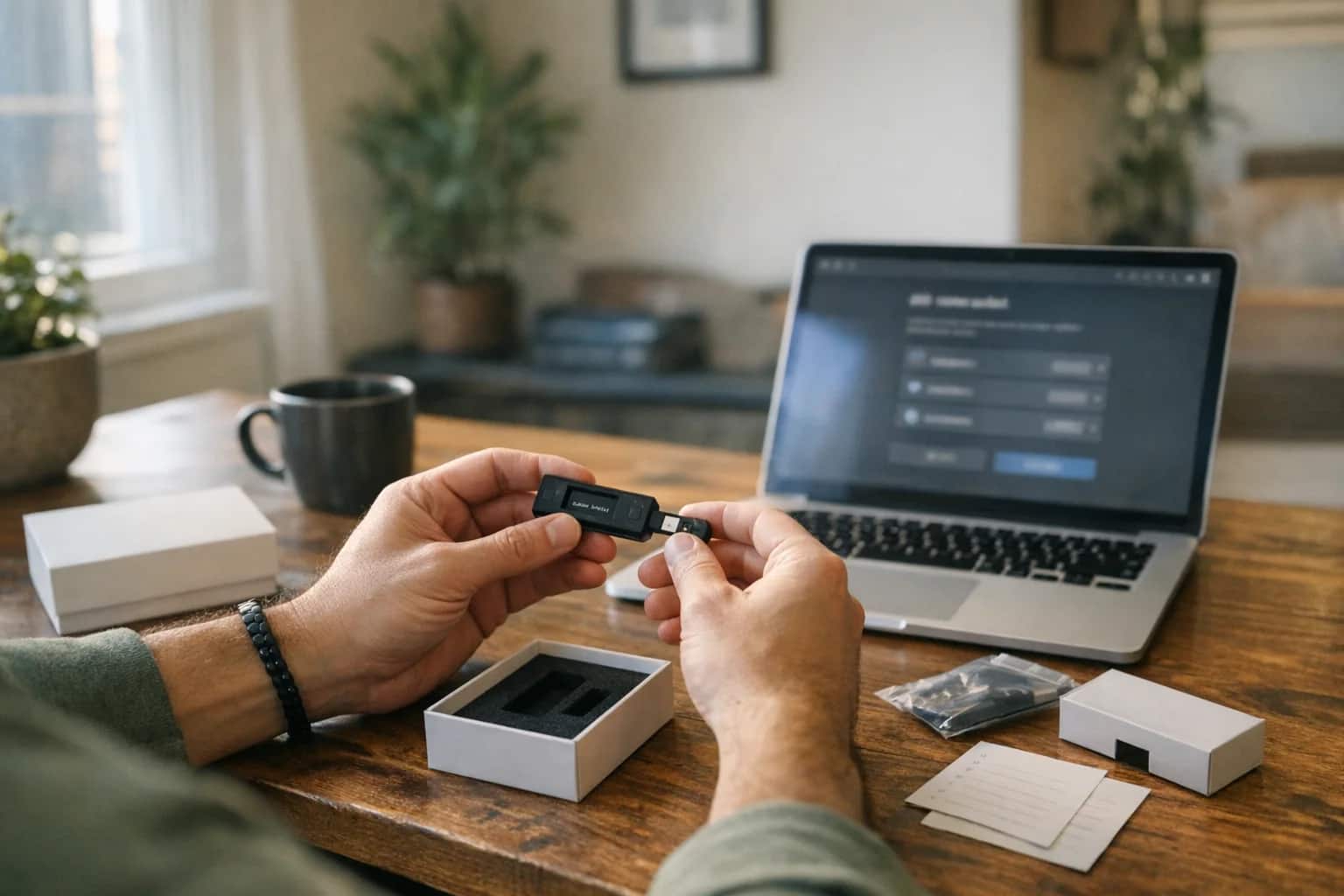
Users hold their own private keys, typically in a non-custodial wallet (e.g., MetaMask, Ledger hardware wallet). This eliminates counterparty risk associated with centralized exchanges or custodians. The user bears full responsibility for key security, as lost keys mean irrevocable loss of access.
04
Programmability & Composability
Ownership logic can be encoded into smart contracts, enabling complex, automated behaviors. Assets become composable—they can interact with other contracts in decentralized applications (dApps). Examples include:
- Automated royalties for NFT creators on secondary sales.
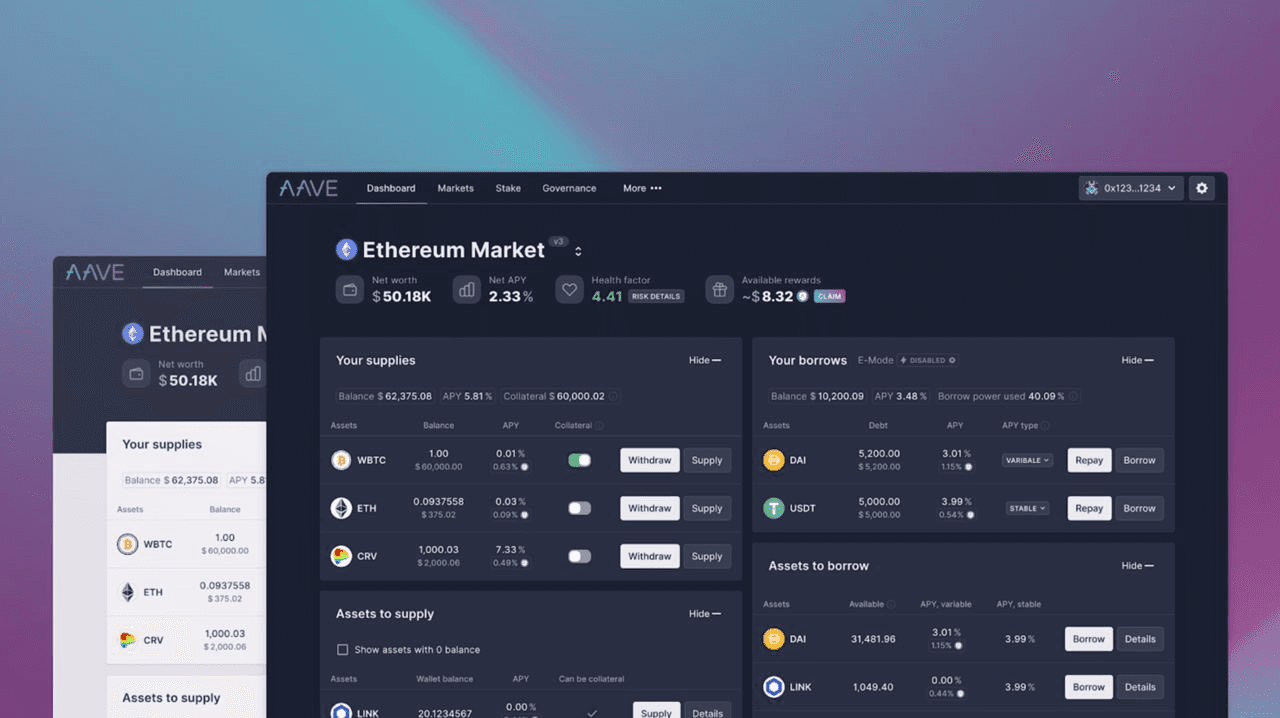
- Collateralizing tokens in a lending protocol like Aave.
- Voting rights tied to governance token ownership.
05
Permissionless Verification
Anyone with internet access can independently verify an ownership claim by querying the public ledger. This open verification model contrasts with closed, permissioned systems. It enables trustless interactions in DeFi (verifying collateral), NFT marketplaces (verifying authenticity), and DAOs (verifying voting power).
06
Portability & Interoperability
Ownership is not tied to a specific platform or jurisdiction. Assets can be transferred peer-to-peer across borders. Emerging standards like ERC-20 (fungible tokens) and ERC-721 (non-fungible tokens) facilitate interoperability, allowing assets to be recognized and used across different wallets, exchanges, and blockchain applications.
examples
VERIFIABLE OWNERSHIP
Examples & Use Cases
Verifiable ownership, enabled by blockchain, transforms digital and physical assets by providing a cryptographically secure and transparent record of possession. These examples illustrate its practical applications.
04
In-Game Assets & Player Economies
Blockchain-based games grant players true ownership of in-game items (characters, skins, land) as tokens in their personal wallet, not just a license from the game developer. This enables:
- True Digital Property: Assets persist beyond the game's lifespan and can be sold or traded peer-to-peer.
- Interoperable Economies: A sword earned in one game could potentially be used in another compatible game universe.
- Player-Driven Markets: Players become stakeholders, with verifiable ownership enabling complex economies and lending protocols for rare items.
05
Supply Chain Provenance
Verifiable ownership tracks the custody chain of a physical good from origin to consumer. Each transfer of custody is recorded as a transaction on a blockchain.
- Authenticity Verification: Consumers can scan a QR code to see an immutable history proving a diamond is conflict-free or a designer handbag is genuine.
- Automated Compliance: Smart contracts can automatically enforce ownership transfers only when certain conditions (e.g., payment, customs clearance) are met.
- Recall Efficiency: Precisely identify affected batches of a product by tracing ownership history back to the source.
06
Intellectual Property & Royalties
Creators can register ownership of music, writing, or code directly on a blockchain. This creates an immutable, time-stamped record of creation and enables:
- Automated Royalty Distribution: Smart contracts can split and distribute payments instantly to all rights holders (composers, producers, labels) based on pre-defined rules.
- Transparent Licensing: The terms for using the IP are embedded in the asset itself, making licensing verifiable and automatic.
- Reduced Disputes: A single source of truth for ownership eliminates conflicts over attribution and revenue sharing.
COMPARISON
Verifiable Ownership vs. Traditional Digital Ownership
A structural comparison of ownership models based on their underlying technology and resulting properties.
| Feature | Verifiable Ownership (Blockchain-Based) | Traditional Digital Ownership (Platform-Based) |
|---|---|---|
Underlying Record | Decentralized ledger (e.g., blockchain) | Centralized database |
Proof of Authenticity | Cryptographic signature | Platform account credentials |
Custody & Control | User-held private key | Platform as custodian |
Transferability | Peer-to-peer, permissionless | Platform-mediated, restricted |
Censorship Resistance | ||
Immutability of Record | ||
Interoperability | Programmable across applications | Confined to issuing platform |
Provenance Tracking | Complete, transparent history | Opaque or limited history |
ecosystem-usage
VERIFIABLE OWNERSHIP
Ecosystem Implementation
Verifiable ownership is a cryptographic property that proves an entity's exclusive control over a digital asset, such as an NFT or tokenized real-world asset (RWA), without relying on a central authority. Its implementation across the blockchain ecosystem enables new financial primitives, identity systems, and market structures.
01
Soulbound Tokens (SBTs)
Soulbound Tokens (SBTs) are non-transferable tokens that represent credentials, affiliations, or achievements, permanently bound to a specific wallet or 'Soul'. They are a foundational primitive for implementing verifiable decentralized identity (DID) and reputation systems.
- Key Use Cases: Proof of participation, educational certificates, credit history, and guild membership.
- Technical Basis: Built on standards like ERC-721 or ERC-1155 with transfer restrictions, often leveraging zero-knowledge proofs for privacy.
02
Tokenized Real-World Assets (RWAs)
This implementation uses blockchain tokens to represent ownership of physical or traditional financial assets, such as real estate, treasury bills, or commodities. Verifiable on-chain ownership enables fractionalization, 24/7 trading, and automated compliance.
- Key Mechanism: Legal wrappers and oracle networks bridge off-chain asset custody and legal title to on-chain token ownership.
- Example: A $1M commercial property can be tokenized into 1,000,000 tokens, each representing a verifiable fractional claim to the underlying asset's value and income.
03
Decentralized Physical Infrastructure (DePIN)
DePIN projects use verifiable ownership of hardware or data to coordinate and incentivize the deployment of real-world infrastructure. Contributors prove they own and operate valid resources (e.g., WiFi hotspots, sensors, GPU clusters) to earn tokens.
- Proof-of-Physical-Work: Cryptographic proofs verify that a specific, owned device is performing useful work for the network.
- Economic Model: Creates a cryptographically verifiable link between asset ownership, contribution, and reward distribution.
04
Account Abstraction & Smart Accounts
Account Abstraction (ERC-4337) separates ownership logic from the core protocol, enabling smart contract wallets. This allows for sophisticated ownership models beyond a single private key.
- Multi-signature & Social Recovery: Ownership can be distributed among multiple keys or trusted entities.
- Session Keys & Delegation: Users can grant verifiable, time-bound authority to specific applications without surrendering full asset custody.
- Gas Sponsorship: A third party can pay transaction fees, decoupling payment from ownership.
05
Cross-Chain & Interoperability Protocols
These protocols enable verifiable ownership of assets to be represented and utilized across multiple blockchain ecosystems. They solve the problem of locked liquidity and fragmented user experience.
- Wrapped Assets: A canonical representation (e.g., wBTC) where ownership on Ethereum is backed 1:1 by verifiably locked Bitcoin on its native chain.
- Cross-Chain Messaging: Protocols like IBC (Inter-Blockchain Communication) and certain bridges use light clients or cryptographic proofs to verify state, including ownership, from a foreign chain.
06
Verifiable Credentials (VCs) & ZK Proofs
This layer combines W3C Verifiable Credentials with zero-knowledge proofs (ZKPs) to enable privacy-preserving proof of ownership or attributes. A user can prove they own an asset or credential without revealing its specific details.
- Selective Disclosure: Prove you own a token from a specific collection without revealing which one.
- Proof of Inclusion: Generate a ZK proof that your address is on a verifiable merkle allowlist for a token airdrop or mint.
- Compliance: Institutions can prove verifiable ownership of licensed assets to regulators in a privacy-enhanced manner.
security-considerations
VERIFIABLE OWNERSHIP
Security Considerations & Limitations
While cryptographic proofs establish ownership, practical implementation introduces risks related to key management, smart contract security, and the underlying blockchain's consensus.
01
Private Key Custody
Verifiable ownership is ultimately secured by a private key. Loss, theft, or compromise of this key results in irreversible loss of assets. This introduces risks like:
- Phishing attacks targeting key storage.
- Insecure key generation by wallets.
- Single point of failure for self-custody, with no centralized recovery mechanism.
02
Smart Contract Vulnerabilities
Ownership of tokens (e.g., ERC-721, ERC-1155) is enforced by smart contract logic. Flaws in this code can undermine verifiable ownership, leading to:
- Reentrancy attacks allowing unauthorized transfers.
- Logic errors in access control or minting functions.
- Upgradeable contract risks, where a malicious upgrade could alter ownership rules.
03
Consensus & Finality Attacks
Proof of ownership depends on the immutability and finality of the underlying blockchain. Limitations include:
- 51% attacks on Proof-of-Work chains allowing chain reorganization (reorgs), which can reverse transactions.
- Long-range attacks on some Proof-of-Stake chains challenging historical state.
- Temporary forks creating uncertainty about which chain holds the canonical ownership record.
04
Oracle & Data Authenticity
For assets representing off-chain items (e.g., real estate, credentials), verifiable ownership relies on oracles to attest to real-world data. This introduces trust assumptions:
- Oracle manipulation or downtime can corrupt the ownership record.
- Data source compromise at the origin point.
- The system's security is only as strong as its weakest link between the blockchain and the physical asset.
05
Privacy & Surveillance Risks
Public blockchains make ownership graphs transparent and analyzable, creating security trade-offs:
- Address clustering can deanonymize owners, enabling targeted attacks.
- Front-running where pending ownership transfers (transactions) are visible in the mempool.
- Wealth exposure making high-value wallets perpetual targets for exploitation.
06
Legal & Regulatory Ambiguity
Cryptographic proof does not always equate to recognized legal ownership. Key limitations are:
- Jurisdictional mismatch where blockchain state is not recognized by local courts.
- Asset seizure by authorities targeting centralized intermediaries (exchanges, wallet providers) holding user keys.
- Immutable errors where a transfer, once proven on-chain, cannot be reversed even if it was fraudulent, relying entirely on off-chain legal recourse.
VERIFIABLE OWNERSHIP
Common Misconceptions
Clarifying fundamental misunderstandings about how digital ownership is proven and secured on blockchains.
Yes, in the context of blockchain, private key ownership is synonymous with asset ownership. A private key is a cryptographic secret that generates a public address and authorizes transactions. Custodial wallets (like those on exchanges) are the exception, where you own an account but the exchange controls the private keys. True, non-custodial ownership means you alone hold the key, giving you exclusive control to sign transfers or interact with the asset. Losing the private key means irrevocably losing access, as there is no central authority to recover it. This is why the phrase 'your keys, your crypto' is a core principle of self-sovereign ownership.
VERIFIABLE OWNERSHIP
Technical Deep Dive
Verifiable ownership is the cryptographic proof that a specific entity controls a digital asset, such as an NFT or token, without relying on a central authority. This section explores the technical mechanisms, standards, and security models that underpin this foundational blockchain capability.
Verifiable ownership on a blockchain is the cryptographic proof, recorded on a distributed ledger, that a specific entity controls a digital asset like an NFT or token. It works by linking an asset to a public address, with control proven by the ability to sign a transaction with the corresponding private key. This system replaces centralized registries with a transparent, immutable, and trustless record. Smart contracts, such as those implementing the ERC-721 or ERC-1155 standards, define the rules for ownership transfer. The state of ownership is updated on-chain via transactions, and anyone can independently verify the current owner by querying the blockchain, as the proof is decentralized and does not depend on a single issuer's database.
Chains We Build On
Looking to build on a specific blockchain?
We build smart contracts, DeFi applications, wallets, tokenization platforms, and blockchain infrastructure across the major ecosystems teams choose today. That includes Ethereum, Arbitrum, Optimism, Polygon, Avalanche, Solana, Sui, Aptos, Hedera, Stellar, and NEAR, with support for additional EVM and non-EVM networks based on your product requirements.
EVM ecosystems
- Ethereum

- Arbitrum

- Optimism

- Polygon

- Avalanche

- Cronos

Non-EVM ecosystems
- Solana

- Sui

- Aptos

- Hedera

- Stellar

- NEAR

Additional ecosystems
- Polkadot

- Cosmos

- TON

- Cardano

- Algorand

- Tempo

Also available for Base, appchains, custom EVM networks, and cross-chain product architecture.
VERIFIABLE OWNERSHIP
Frequently Asked Questions (FAQ)
Essential questions and answers about the cryptographic proof of digital asset ownership, covering NFTs, tokens, and the underlying technology.
Verifiable ownership on the blockchain is the cryptographic proof that a specific entity controls a digital asset, such as an NFT or token, as recorded immutably on a distributed ledger. This proof is established through a combination of public-key cryptography and the blockchain's consensus mechanism. The owner holds a private key that can cryptographically sign transactions to transfer or interact with the asset, while the corresponding public address is recorded on-chain as the asset's owner. This system eliminates the need for a trusted third-party validator, as anyone can independently verify the ownership chain by checking the public transaction history. It is the foundational concept enabling true digital scarcity and property rights for assets like CryptoPunks, Bored Ape Yacht Club NFTs, and ERC-20 tokens.
Trusted by Industry Leaders
Delivering blockchain solutions for 5+ years.
We have partnered with 50+ leading DeFi protocols, NFT ecosystems, and fintech innovators to build secure, scalable, and capital-efficient blockchain products.
Selected Partners & Clients








“I've been working with Chainscore Labs for last 3+ years, they've consistently delivered with strong ownership across multiple projects. The team is reliable and detail-oriented.”
L
Lee Erswell
CEO, Telos Foundation
how to get started
How to get started?
If you're looking for blockchain integration, ChainScore Labs has 5+ years of experience helping teams build and integrate exchanges, wallets, smart contracts, tokenization solutions, and protocol-connected products, we can help you choose the right path, integrate securely, and get to production faster. Our team consists of experienced blockchain developers and architects who can help you with your blockchain integration needs.
01
Exploration & Strategy
Define your product goals and choose the right blockchain architecture for your use case.
02
Architecture & Design
Design the smart contracts, tokenomics, and security parameters of your system.
03
Development & Integration
Build and integrate with wallets, oracles, and front-end dApps for a seamless experience.
04
Security & Launch
Comprehensive audits followed by a risk-managed mainnet deployment to protect your users.
Explore More Solutions
Discover our
blockchain development services.
We build production-grade blockchain solutions for top-tier projects across DeFi and Web3.
Book a Call

Start a build
Need a blockchain engineering team?
Send the project context and we will respond with next steps, scope questions, and a practical path to delivery.