Multi-sig wallets centralize governance. The security model relies on a small, known group of signers, creating a single point of failure and control that is antithetical to decentralized systems.
Blog
Why Multi-Sig Wallets Are a Centralization Bottleneck
Protocols from Lido to Circle rely on multisig-controlled upgrade keys. This creates a legal and technical single point of failure, undermining the decentralized resilience they promise. We analyze the systemic risk and the path forward.
introduction
THE MULTI-SIG BOTTLENECK
The Illusion of Decentralized Control
Multi-signature wallets, while a security improvement, create a centralized governance bottleneck that contradicts the core promise of decentralized networks.
Signer identity is the vulnerability. The security of a $500M treasury depends on the physical and digital security of 5-9 individuals, a risk profile similar to traditional finance, not a trustless protocol.
Protocol upgrades become political. Projects like Arbitrum and Optimism require multi-sig approval for L1 bridge operations, meaning a handful of entities can unilaterally freeze or censor the entire chain.
Evidence: The 2022 Ronin Bridge hack exploited a 5-of-9 multi-sig, compromising $625 million. The attack vector was not a smart contract bug but the compromise of private keys held by centralized entities.
thesis-statement
THE CENTRALIZATION BOTTLENECK
Core Thesis: Multisigs Are a Governance & Execution Single Point of Failure
Multisig wallets concentrate trust in a small, identifiable group, creating a systemic risk for decentralized protocols.
Multisigs centralize final execution. The governance process is a public signal, but a Gnosis Safe with 5/9 signers holds the private keys. This creates a single point of failure for asset transfers, contract upgrades, and parameter changes across DeFi.
Governance is a suggestion box. DAOs like Arbitrum or Uniswap vote on proposals, but a multisig council executes them. This separation creates a dangerous illusion of decentralization where a small committee can veto or alter community decisions.
Attack surface is human, not cryptographic. The security model shifts from code to key management and social engineering. Incidents like the $325M Wormhole hack or the Ronin Bridge exploit demonstrate that compromising a few signers breaks the entire system.
Evidence: Over 90% of top-tier cross-chain bridges (e.g., Polygon PoS Bridge, Arbitrum Bridge) and major DAO treasuries rely on a 5-9 member multisig as their ultimate security layer.
case-study
WHY MULTI-SIG WALLETS ARE A BOTTLENECK
Case Studies in Centralized Failure Points
Multi-sig wallets, while an improvement over single keys, create predictable chokepoints for governance, upgrades, and security, undermining the decentralized ethos they aim to protect.
01
The Gnosis Safe 5-of-8 Dilemma
The Gnosis Safe multi-sig model, securing $40B+ in assets, centralizes control in a small, often overlapping group of signers. This creates a predictable attack surface and governance bottleneck.
- Single Point of Coordination Failure: Protocol upgrades and treasury management require consensus from a known, small committee.
- Social Engineering Target: Signer identities are public, making them prime targets for exploits like the $100M+ Wintermute hack.
$40B+
TVL at Risk
5/8
Typical Quorum
02
Bridge Guardians as Cartels
Cross-chain bridges like Wormhole and Polygon PoS Bridge rely on a ~19-member multi-sig for validation. This 'guardian' set is a centralized cartel with unilateral power over $1B+ in locked assets.
- Trust Assumption: Users must trust the honesty of all guardians, a regression from cryptographic guarantees.
- Upgrade Key Control: The same multi-sig often holds the upgrade key, allowing for arbitrary logic changes, as seen in the Nomad bridge hack recovery.
~19
Guardian Count
$1B+
Bridge TVL
03
DAO Treasury Paralysis
DAOs like Uniswap and Compound use multi-sigs (e.g., 4-of-6) to execute passed proposals. This creates a human latency layer that slows protocol evolution to the pace of committee availability.
- Governance Bottleneck: A proposal can pass with millions of votes but stall awaiting manual signatures.
- Key Person Risk: Loss of access or dissent among a few signers can freeze $3B+ treasuries, forcing complex and risky recovery operations.
4/6
Execution Quorum
Days-Weeks
Execution Delay
04
The MPC Wallet Illusion
MPC (Multi-Party Computation) wallets like Fireblocks and Coinbase Custody distribute key shares but retain centralized control over the signing algorithm and node infrastructure.
- Vendor Lock-in: The service provider controls the protocol, creating a single point of technical failure.
- Opaque Governance: The security model depends on the provider's internal controls and is not verifiable on-chain, unlike true smart contract wallets.
1
Provider
Off-Chain
Verification
05
Upgrade Key Centralization
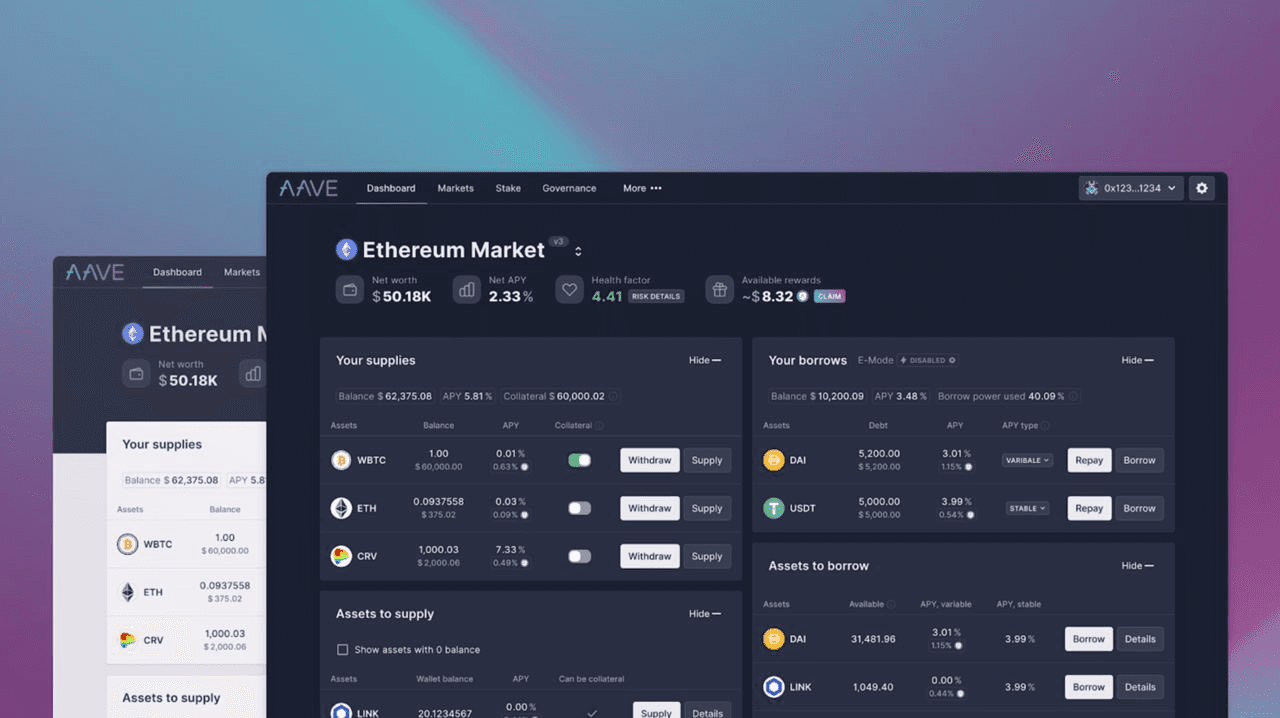
Most Proxy Upgradeable Contracts (e.g., Aave, dYdX) vest the upgrade authority in a multi-sig. This means the entire protocol's logic can be changed by 3-7 individuals, violating the immutability principle.
- Code is Not Law: The live contract is a placeholder; the real rules are the mutable intentions of the signers.
- Instant Rug Vector: A compromised multi-sig can redirect all user funds, as nearly happened with the SushiSwap MISO hack.
3-7
Key Holders
All TVL
At Risk
06
The Path Forward: Account Abstraction
The solution is moving signing logic on-chain via ERC-4337 Account Abstraction and smart contract wallets. This replaces fixed multi-sig committees with programmable, transparent, and resilient security models.
- Programmable Recovery: Social recovery, time-locks, and governance modules replace brittle human committees.
- Verifiable Security: The wallet's rules are immutable public code, eliminating opaque trust in signers.
- Native Integration: Projects like Safe{Wallet} are migrating to a Smart Account model to solve these exact bottlenecks.
ERC-4337
Standard
On-Chain
Logic
WHY MULTI-SIG WALLETS ARE A CENTRALIZATION BOTTENECK
The Multisig Dependency Matrix: A Systemic Risk Audit
A quantitative breakdown of systemic risks and operational constraints inherent to multi-signature wallet governance across major DeFi protocols.
| Risk Vector / Metric | Gnosis Safe (Ethereum) | Compound Governance (Bravo) | Uniswap DAO (via Sybil) |
|---|---|---|---|
Signer Set Size (Governance) | 5-10 signers | ~700k UNI delegated | ~100k UNI delegated |
Proposal Execution Latency (Typical) | 24-72 hours | ~8 days | ~7 days |
Signer Geographic Concentration | 3-4 jurisdictions | Global, but US-weighted | Global, but US-weighted |
Single-Point-of-Failure (Key Loss/Theft) | |||
On-Chain Transparency of Signer Actions | |||
Avg. Gas Cost for Execution | $150-$500 | $20k-$50k | $15k-$40k |
Dependency on Off-Chain Coordination | Discord, Telegram | Discourse, Snapshot | Discourse, Snapshot |
deep-dive
THE OPERATIONAL REALITY
Anatomy of a Bottleneck: Legal Seizure vs. Technical Paralysis
Multi-sig wallets create a single point of failure that is vulnerable to both legal coercion and operational deadlock.
Legal seizure is trivial. A court order compels key-holders to sign. This centralization defeats the purpose of decentralized custody, as seen in the Tornado Cash governance freeze where a multi-sig executed OFAC sanctions.
Technical paralysis is inevitable. Multi-sig upgrades or emergency actions require synchronous human coordination. The Gnosis Safe upgrade delay demonstrated how reliance on geographically dispersed signers creates operational risk.
The bottleneck is human latency. Whether for a routine protocol upgrade on Arbitrum or an emergency response, waiting for 5/9 signers to manually approve a transaction is a scalability constraint for the entire network.
Evidence: Over 85% of Total Value Locked in bridges like Multichain (formerly Anyswap) and Polygon PoS Bridge relied on 5/8 or 8/15 multi-sigs, creating systemic risk validated by the Multichain exploit.
risk-analysis
CENTRALIZATION BOTTLENECK
The Slippery Slope: Cascading Risks of Multisig Reliance
Multisig wallets, while a security upgrade from single keys, create systemic choke points that undermine the very decentralization they aim to protect.
01
The Single Point of Liveness Failure
Multisigs trade single-key failure for a quorum failure. If signers are unavailable, the entire protocol's upgrade path or treasury is frozen. This creates a liveness vs. security trade-off where decentralization is sacrificed for uptime.
- Catastrophic for DeFi: A frozen bridge like Wormhole or Polygon PoS halts $1B+ in daily volume.
- Governance Paralysis: DAOs like Arbitrum or Uniswap cannot execute critical security patches during a crisis.
100%
Halt Risk
2/5
Typical Quorum
02
The Legal Attack Surface
Identifiable signers are vulnerable to regulatory pressure or physical coercion, a risk abstracted smart contracts don't face. This turns a cryptographic security model into a legal one.
- OFAC Compliance: Entities like Tornado Cash Relayers were targeted, setting a precedent for multisig signers.
- Jurisdictional Risk: A globally distributed set like Lido's or MakerDAO's can be compromised if a majority fall under one regulator's jurisdiction.
KYC'd
Signer Identity
Global
Attack Vector
03
The Trusted Setup Recurrence
Every new multisig is a new trusted setup. The initial key generation and distribution require faith in the participants' integrity and operational security, replicating the very problem blockchain consensus solves.
- Persistent Risk: Compromise during the Genesis ceremony (e.g., for a bridge like Across or layerzero) is undetectable and permanent.
- Opaque Security: Real-world security practices of signers (hardware, procedures) are unverifiable on-chain, unlike cryptographic proofs.
Perpetual
Trust Assumption
Off-Chain
Security Model
04
The Innovation Ceiling
Multisig logic is static and cannot integrate with dynamic on-chain conditions or intents. It blocks the evolution towards autonomous, condition-based security models like those explored by Safe{Wallet} with Zodiac or Catalyst.
- No Programmable Security: Cannot auto-slashe a malicious signer or trigger based on oracle data.
- Stagnant Design: Contrast with UniswapX's intent-based fills or CowSwap's batch auctions, which abstract settlement logic.
Static
Logic
0
On-Chain Conditions
05
The Economic Centralization Vector
Running a secure signer operation (HSMs, infra, legal) has high fixed costs, naturally limiting participation to well-funded entities. This recreates the miner/validator centralization problem at the governance layer.
- Barrier to Entry: Cost excludes grassroots community members, biasing control towards VCs and foundations.
- Stake Concentration: Similar to Lido's staking dominance, but for protocol control.
$100k+
OpEx Per Year
VC-Heavy
Signer Pool
06
The Inevitable Migration Cost
Moving from a multisig to a more decentralized model (e.g., DVT, MPC, or on-chain governance) requires the multisig to sign its own death warrant—a paradoxical and risky transition that often gets deferred indefinitely.
- Transition Risk: The Polygon to zkEVM migration or dYdX's chain move highlights the complexity of upgrading the root of trust.
- Status Quo Bias: Leads to $30B+ in TVL remaining on "temporary" multisig setups for years.
High
Transition Risk
Years
Deferral
Chains We Build On
Looking to build on a specific blockchain?
We build smart contracts, DeFi applications, wallets, tokenization platforms, and blockchain infrastructure across the major ecosystems teams choose today. That includes Ethereum, Arbitrum, Optimism, Polygon, Avalanche, Solana, Sui, Aptos, Hedera, Stellar, and NEAR, with support for additional EVM and non-EVM networks based on your product requirements.
EVM ecosystems
- Ethereum

- Arbitrum

- Optimism

- Polygon

- Avalanche

- Cronos

Non-EVM ecosystems
- Solana

- Sui

- Aptos

- Hedera

- Stellar

- NEAR

Additional ecosystems
- Polkadot

- Cosmos

- TON

- Cardano

- Algorand

- Tempo

Also available for Base, appchains, custom EVM networks, and cross-chain product architecture.
counter-argument
THE MISCONCEPTION
Steelman: "But We Need Them for Speed and Security!"
Multi-sig wallets are a temporary, centralized bottleneck masquerading as a security solution.
Multi-sig security is illusory. It centralizes trust in a small, identifiable group of signers who become high-value targets for coercion and collusion, creating a single point of failure.
Speed is a false trade-off. True decentralization, like Ethereum's validator set or Sovereign Rollups, provides finality without a centralized committee. Multi-sig speed is a symptom of centralization, not an architectural feature.
The bridge hack evidence is clear. The majority of the $2.5B+ in bridge exploits, including Wormhole and Ronin Bridge, targeted multi-sig governance or validator keys, proving the model's fragility.
The future is cryptographic, not social. Protocols like Across use optimistic verification, and zk-Rollups use validity proofs, removing trusted signers entirely. Multi-sigs are a legacy scaffold.
takeaways
THE MULTI-SIG TRAP
TL;DR: The Path to Resilience
Multi-sig wallets, while a security upgrade, create critical operational and security bottlenecks that undermine decentralization.
01
The Human Bottleneck
Multi-sig governance is a coordination nightmare. Every upgrade or treasury transfer requires manual, synchronous approval from geographically dispersed signers, creating days or weeks of latency. This is antithetical to the real-time demands of DeFi and on-chain governance.
- Operational Risk: Critical security patches are delayed.
- Voting Fatigue: Signer participation decays over time.
- Single Point of Failure: The process itself becomes the attack surface.
5-7 days
Avg. Delay
<60%
Voter Turnout
02
The $10B+ TVL Target
Concentrating control of massive treasuries (e.g., Lido, Arbitrum DAO, Uniswap) in a handful of keys creates a systemic risk. It incentivizes sophisticated social engineering (e.g., phishing) and physical attacks on signers, as seen in the $600M Poly Network exploit.
- Security Theater: Appears decentralized, but attack vectors are concentrated.
- Key Management Hell: MPC or hardware wallets don't solve the human trust layer.
- Regulatory Magnet: A clear, accountable 'board' for regulators to target.
$10B+
TVL at Risk
5/9
Typical Quorum
03
The On-Chain Primitive Solution
Resilience requires moving authority from off-chain committees to programmable on-chain logic. Smart contract wallets (Safe{Wallet}), with rules-based automation via Zodiac, and intent-based architectures (UniswapX, CowSwap) demonstrate the path forward.
- Programmable Security: Time-locks, spending limits, and role-based permissions.
- Automated Execution: Pre-signed transactions that execute upon on-chain conditions.
- Progressive Decentralization: Transition from multi-sig to governed smart contracts or DAOs.
~90%
Ops Automated
24/7
Execution Uptime
04
The MPC & TSS Illusion
Multi-Party Computation (MPC) and Threshold Signature Schemes (TSS) like Fireblocks improve key management but not governance. They shift the centralization point from individual keys to the orchestrator node and the participant set, which remains a small, trusted group.
- Vendor Lock-in: Reliance on a specific MPC provider's infrastructure.
- Opaque Governance: The signing committee is still a black-box off-chain process.
- Not Permissionless: Cannot be audited or participated in by the broader network.
1
Orchestrator SPOF
Closed
System
Trusted by Industry Leaders
Delivering blockchain solutions for 5+ years.
We have partnered with 50+ leading DeFi protocols, NFT ecosystems, and fintech innovators to build secure, scalable, and capital-efficient blockchain products.
Selected Partners & Clients








“I've been working with Chainscore Labs for last 3+ years, they've consistently delivered with strong ownership across multiple projects. The team is reliable and detail-oriented.”
L
Lee Erswell
CEO, Telos Foundation
how to get started
How to get started?
If you're looking for blockchain integration, ChainScore Labs has 5+ years of experience helping teams build and integrate exchanges, wallets, smart contracts, tokenization solutions, and protocol-connected products, we can help you choose the right path, integrate securely, and get to production faster. Our team consists of experienced blockchain developers and architects who can help you with your blockchain integration needs.
01
Exploration & Strategy
Define your product goals and choose the right blockchain architecture for your use case.
02
Architecture & Design
Design the smart contracts, tokenomics, and security parameters of your system.
03
Development & Integration
Build and integrate with wallets, oracles, and front-end dApps for a seamless experience.
04
Security & Launch
Comprehensive audits followed by a risk-managed mainnet deployment to protect your users.
Explore More Solutions
Discover our
blockchain development services.
We build production-grade blockchain solutions for top-tier projects across DeFi and Web3.
Book a Call


Author
Prasad Kumkar
Founder & CEO, ChainScore Labs
Prasad Kumkar is the Founder & CEO of ChainScore Labs. Over the last 5+ years, he has worked with teams building exchanges, DeFi infrastructure, smart contracts, tokenization systems, and protocol-level blockchain products, helping founders make architecture, security, and go-live decisions for production Web3 systems.
Start a build
Need a blockchain engineering team?
Send the project context and we will respond with next steps, scope questions, and a practical path to delivery.